
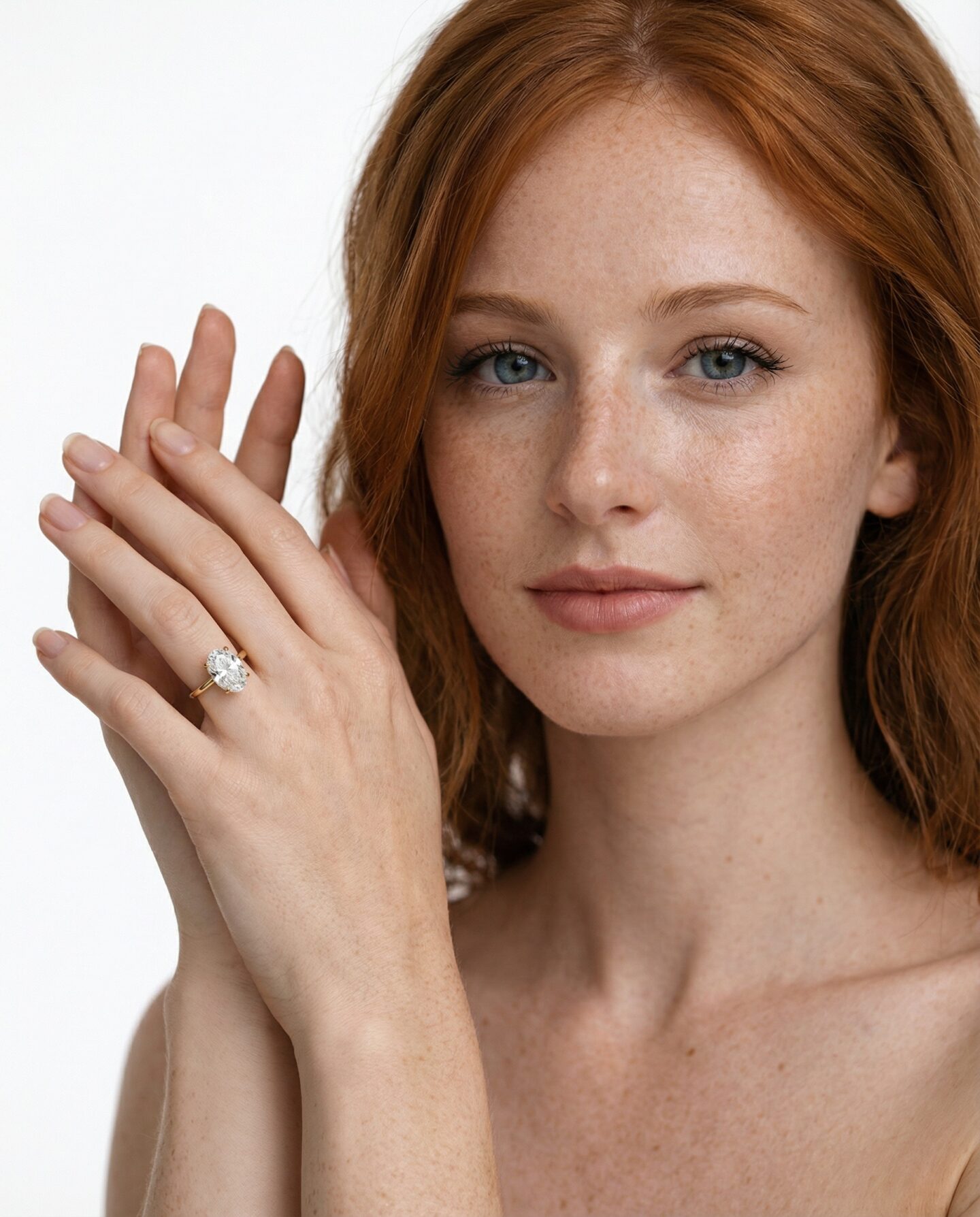
 A one-carat diamond can look neat and understated in one ring, quite bold in another. The difference becomes obvious when you try a simple solitaire beside a ring with a sparkling border, even if their centre stones weigh exactly the same.
For a rough starting point, a typical one-carat round brilliant diamond measures about 6.5mm across. The finished ring will take up more space once its setting is included. How it looks on you depends on that complete outline, your hand and the jewellery you wear alongside it.
Start with millimetres, not an enlarged photograph
Carat measures weight, so it cannot tell you exactly how wide a diamond will be. GIA’s research on round brilliant diamonds uses roughly 6.5 to 6.6mm as a typical diameter for a one-carat stone, while explaining that extra depth can hold weight without adding visible width.
That measurement is a reference, not a rule for every shape. Ask for the actual stone’s length and width in millimetres, and check that the one-carat description refers to the centre diamond rather than several diamonds added together.
Lily Arkwright’s 1 carat lab diamond rings offer a starting point for comparing different outlines and settings. The linked collection includes other stone types too, so select “Lab Diamond” under “Stone Type” before comparing designs.
Longer is different from wider
A round diamond spreads its outline fairly evenly in every direction. An oval, pear or marquise can extend further along the finger while remaining narrower across it. That can create a different impression from a round stone, rather than simply a bigger version of the same look.
For an illustrative comparison, picture a round outline 6.5mm across beside an oval measuring 8mm by 5.5mm. The oval is longer, but the round is wider. These measurements demonstrate the difference in outline; they are not a promise that any two one-carat diamonds will have those dimensions.
If you are browsing at home, draw the shapes on paper using a millimetre ruler and place the cut-outs on your finger. It is a simple way to make tiny measurements less abstract. The paper cannot show sparkle, height or the surrounding metal, but it gives you a better sense of scale than a ring enlarged to fill a screen.
Notice how much of the ring is setting
A halo adds a border of smaller stones around the centre. As GIA’s guide to ring settings explains, that frame can increase the ring’s overall footprint. If you love a broad, sparkling outline, it is worth trying before assuming you need a heavier centre diamond.
A bezel creates a different border: a rim of metal holding the stone. Look at the edge of the diamond and the outside edge of the setting separately. The part you enjoy might be the crisp metal outline as much as the stone itself.
The band changes the balance too. A fine band leaves the centre as the obvious focal point; a broader band gives the metal more presence. Compare similar centre-stone dimensions when trying these options so you can see what the band contributes.
Then turn your hand sideways. Height is another part of the look that an overhead photograph misses. A ring with a compact outline can still sit prominently above your finger.
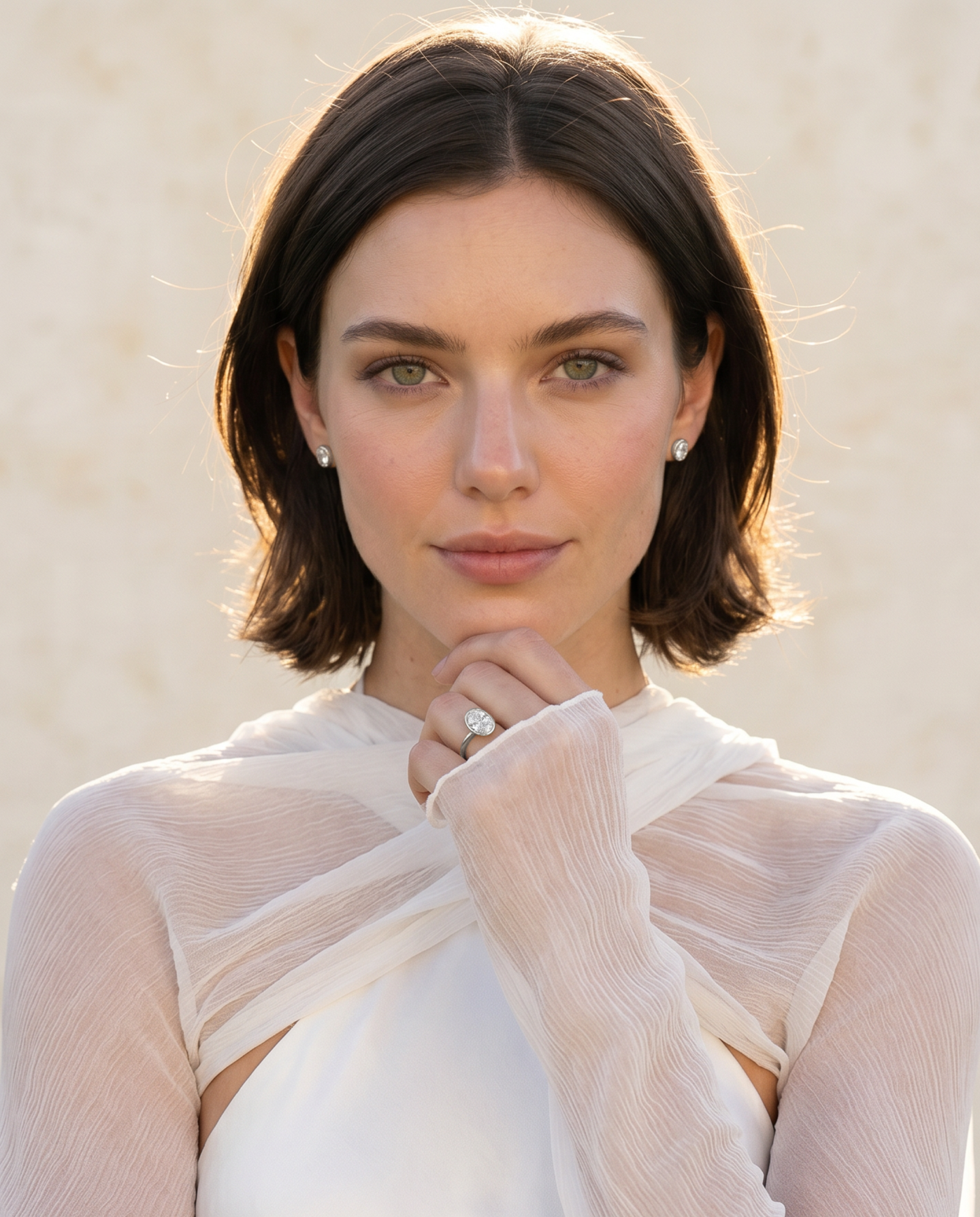
Check the photograph’s scale
Before using a model’s hand as your reference, look for the centre-stone weight used in that particular image. A product page offering a one-carat option may show a larger sample in its photographs. If the size is not stated, ask rather than judging from the picture alone.
Hand proportions matter as well. The same ring covers a different proportion of a narrow finger than a broader one. A caption giving the model’s ring size helps, but does not make their hand identical to yours.
When taking your own comparison pictures, keep the same distance and camera angle, and include the whole hand. Save the close-ups for checking details. A consistent view makes it easier to compare two rings without one getting an accidental advantage from a tighter crop.
Try it with the jewellery you actually wear
Bring your everyday watch or favourite bracelet to a try-on. If you enjoy styling everyday outfits with statement accessories, you may prefer a setting with enough presence to hold its own beside those pieces. If you usually wear very little jewellery, a simple solitaire may already feel quite noticeable.
Try a wedding band alongside it if you plan to wear both. Together, the rings create a different balance of metal and sparkle. Look in a mirror as well as down at your finger, then put the phone away. The useful question is whether you enjoy the ring at the distance you will normally see it, not whether it fills the frame.

