
Stone remembers differently depending on how it was formed. Travertine carries the slow imprint of water and pressure. Volcanic rock holds the abruptness of eruption. In Rome and further south near Naples, these materials frame two ancient sites that continue to hold their shape against weather and time.
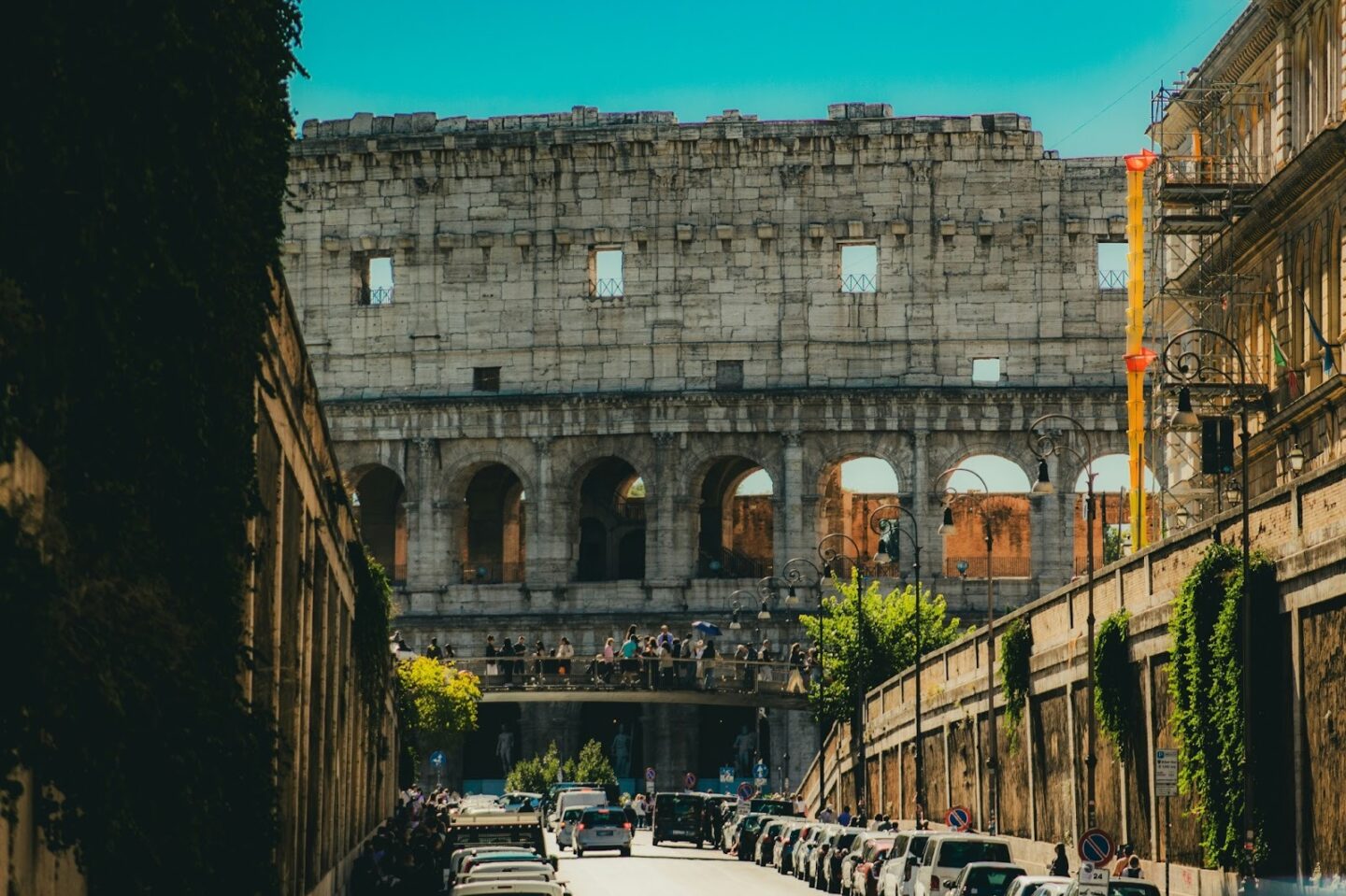
The Colosseum rises in pale repetition. Pompeii rests lower, its streets pressed into darkened earth. One curves upward in arches. The other stretches outward in fragments.
Arches That Frame the Sky
The Colosseum’s travertine appears almost porous in certain light. Its arches repeat in measured intervals, forming a rhythm that becomes more apparent the longer you stand beneath them. From a distance, the structure looks intact. Up close, gaps and fractures reveal the passage of centuries.
Morning often softens its edges. Sunlight filters through the openings, casting shadows that lengthen across the ground before retreating again. The arches do not feel ornamental; they feel structural, shaped by need rather than display.
Many travellers approach Rome by rail, watching the outskirts gather before arriving at Termini, sometimes continuing south on the Rome to Naples train toward volcanic terrain. The movement between these cities compresses history into hours, though the stone tells a slower story.
Standing within the Colosseum’s curve, you notice how light shifts through its openings. The sky becomes part of the architecture, framed in fragments between stone ribs.
Streets Beneath Ash
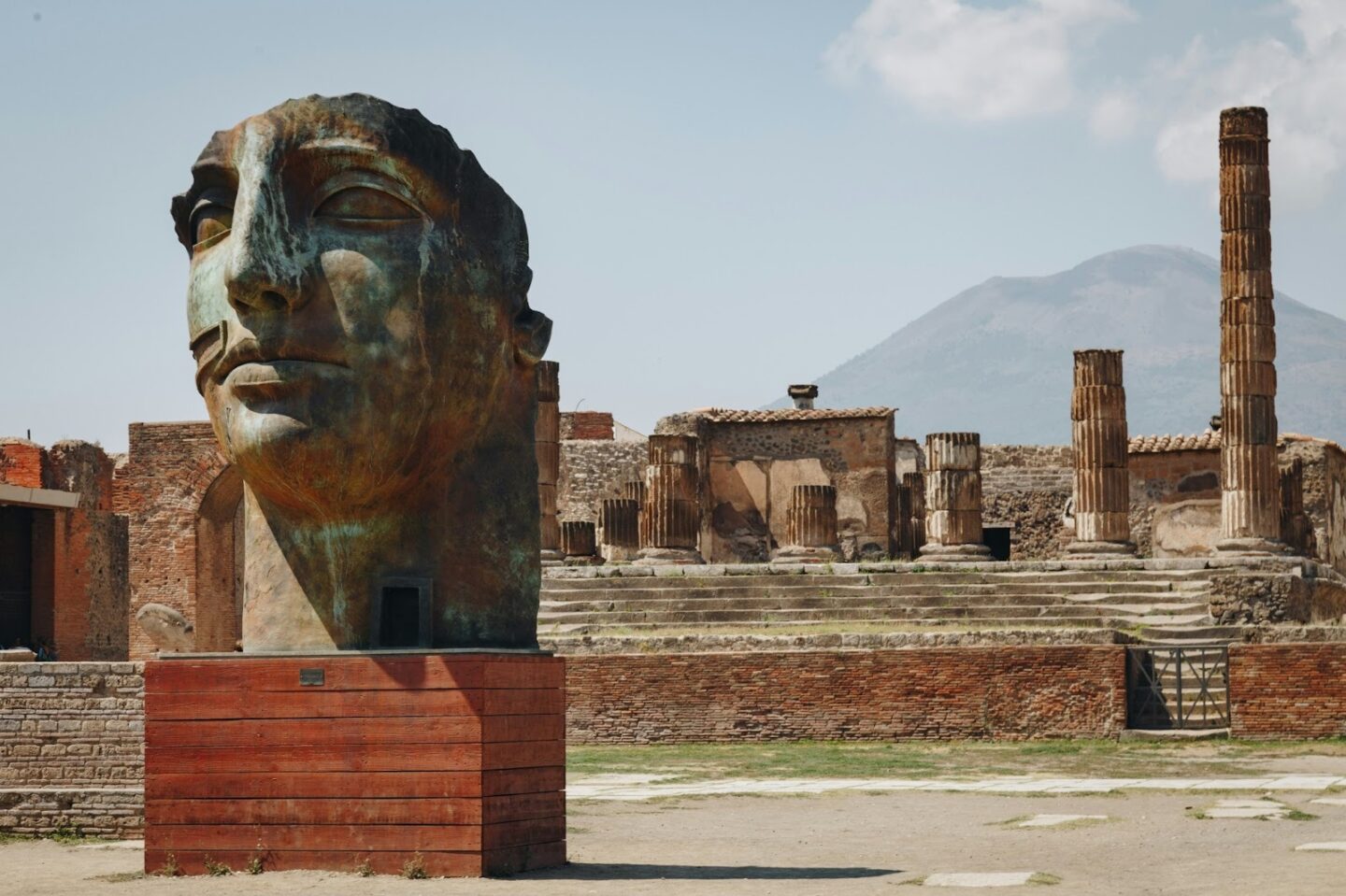
In Pompeii, the stone lies closer to ground. Basalt paving lines streets where wheel ruts remain visible. Walls stand without roofs, their surfaces darkened by the ash that once buried them. The city feels paused rather than ruined.
Mount Vesuvius looms at a distance, its outline steady against sky. The volcanic material underfoot carries a different weight than Rome’s travertine. It feels denser, darker, less reflective.
Travellers who have traced Italy’s northern and central cities on trains from Venice to Florence often find the southern landscape shifts in tone — earthier, more exposed. Pompeii sits within that change, shaped by eruption and preservation.
Walking through its lanes, you sense the unevenness of stone. Doorways open into courtyards that once held colour. Frescoes remain faintly visible on interior walls. The city feels horizontal, spread across ground rather than rising above it.
Pale and Dark
The Colosseum’s travertine lightens under sun, almost blending with sky at midday. Pompeii’s volcanic rock absorbs brightness, retaining shadow even in clear weather. The materials respond differently to the same climate.
In Rome, arches create interior and exterior simultaneously. In Pompeii, streets extend outward, interrupted only by low walls and open thresholds. The difference lies in form as much as in colour.
Rain deepens both surfaces briefly. Travertine turns grey. Basalt darkens further. When dry again, their contrast returns.
Between Capital and Coast
The journey south follows terrain that shifts gradually — from Rome’s layered density to Campania’s more rugged outline. Inside the train carriage, motion remains steady. Outside, hills roll past before flattening near the coast.
Arrival in Naples introduces proximity to sea and mountain at once. Pompeii rests between them, its stone holding both elements quietly.
Memory tends to layer the two sites together. An arch aligns loosely with a street. Pale curve meets dark paving. The distinction remains clear, yet the path between them feels continuous.
When Light Fades
As evening approaches Rome, the Colosseum’s arches become silhouettes, their repetition visible only in outline. In Pompeii, the basalt streets cool into deeper shadow, their texture softened.
Later, recalling the route south, the materials define the memory more than the monuments. Travertine’s pale warmth. Volcanic stone’s darker density.
Nothing resolves into comparison. The arches remain open to sky. The streets remain pressed into earth. The rugged path between them continues beneath a light that shifts and settles without drawing a final line.

